Perfect Sleep Solutions
Sleep apnea affects millions of Canadians. Our expert team in Prince George and Quesnel is dedicated to assessing and managing sleep apnea, providing compassionate, personalized care tailored to each patient’s needs.
What Makes Us Unique
Short Waiting Time
Fast access to HSAT appointment booking within days.
Flexible Scheduling
Appointments tailored to fit your busy lifestyle.
Experienced Specialists
Benefit from 30+ years of expertise in sleep health.
Remote Monitoring
Convenient sleep apnea remote monitoring program.
Simple Referral Process
Easy, streamlined steps for seamless patient referrals.
Locally Owned & Operated
Committed to serving our community with personalized care.
Understanding Sleep Apnea
Common Symptoms
Sleep apnea is a serious condition where breathing repeatedly stops and starts. Awareness of symptoms is the first step towards better health.
- Loud snoring (often reported by a bed partner)
- Episodes in which you stop breathing during sleep
- Gasping for air during sleep
- Awakening with a dry mouth or sore throat
- Morning headache
- Excessive daytime sleepiness (hypersomnia)
- Difficulty concentrating, irritability, or mood changes
When to Consider a Referral & Steps to follow
If you experience any of the symptoms above, especially loud snoring or daytime fatigue, it’s crucial to consult a healthcare professional.
- Step 1: Consult Your Doctor. Discuss your symptoms with your family doctor or a walk-in clinic physician.
- Step 2: Obtain a Referral. Your doctor will provide a referral to a sleep specialist or clinic, such as ours.
- Step 3: Home Sleep Apnea Test (HSAT). We will provide you with a Home Sleep Apnea Test kit to complete in the comfort of your own bed.
- Step 4: Recommendations & Treatment Plan. Our specialists will analyze your HSAT results, provide recommendations and develop a personalized treatment plan.
- Step 5: Ongoing Support. We offer remote monitoring and follow-up care to ensure your treatment is effective.
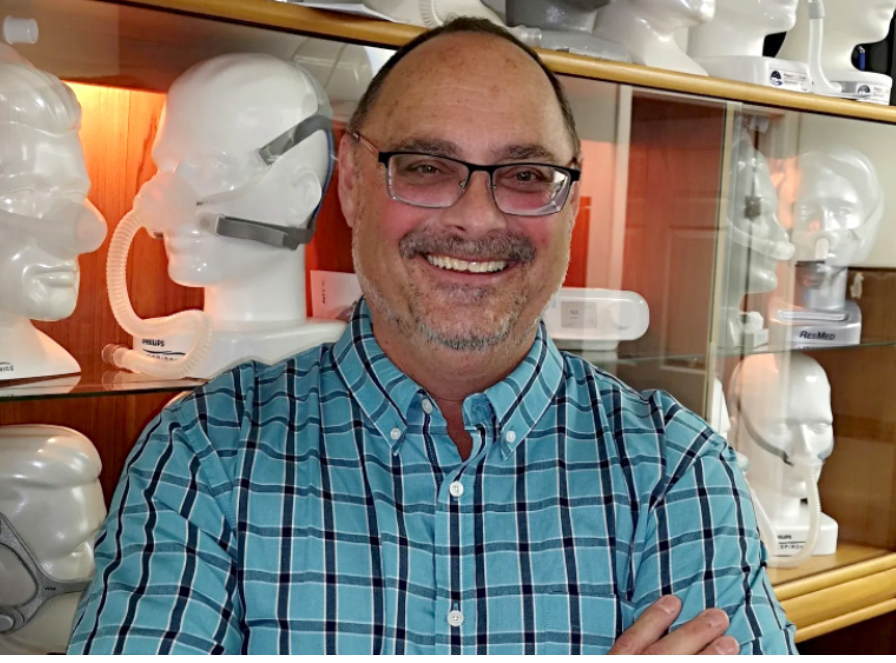
JAY C. WOLFE, BSc., RRT. (REGISTERED RESPIRATORY THERAPIST)
Jay has been a Registered Respiratory Therapist for over 30 years, focusing on Sleep Apnea for more than two decades, with the approach that client care and education always be the top priority. Having a professional that understands and acknowledges your needs while providing the best solutions, is why you want us looking after one of the most fundamental parts of your life – your sleep. Maybe it will be controlling your Obstructive Sleep Apnea through CPAP therapy or maybe an oral appliance might be the solution. Let Jay and his team walk you through your options and help you find the best solution.
Frequently Asked Questions
1. What is sleep apnea?
Sleep apnea is a medical condition characterized by repeated cessation or reduction of airflow during sleep. This disorder may lead to decreased oxygen saturation and fragmented sleep, resulting in daytime fatigue and potential long-term health consequences if left untreated.
2. What are the common clinical manifestations of sleep apnea?
Patients with sleep apnea may present with the following symptoms:
- Loud or chronic snoring
Observed pauses in breathing during sleep - Episodes of choking or gasping at night
- Excessive daytime sleepiness or fatigue
- Morning headaches
- Difficulty with concentration and memory
Individuals experiencing these symptoms are advised to undergo a comprehensive sleep assessment.
3. How is sleep apnea diagnosed?
Diagnosis of sleep apnea is established through a sleep study, which may be conducted either in a clinical sleep laboratory or in the patient’s home using a Home Sleep Apnea Test (HSAT), in accordance with current clinical guidelines and patient suitability.
4. Do I need a referral to book a sleep study?
In most cases, a referral from your family doctor or specialist is required. Please contact us if you’re unsure — we can guide you through the process.
5. What is a Home Sleep Apnea Test (HSAT)?
The HSAT is a portable diagnostic device that monitors respiratory parameters, oxygen saturation, heart rate, and airflow while the patient sleeps in their home environment. HSAT is indicated for the evaluation of suspected obstructive sleep apnea in appropriate patient populations.
6. What is the standard course of action following identification of sleep apnea?
Upon confirmation of sleep apnea, the clinical team will review the assessment findings and recommend evidence-based management options, which may include:
- Continuous Positive Airway Pressure (CPAP) therapy
- Oral appliance therapy
- Lifestyle modifications
Treatment is tailored to the patient’s clinical needs and severity of the condition.
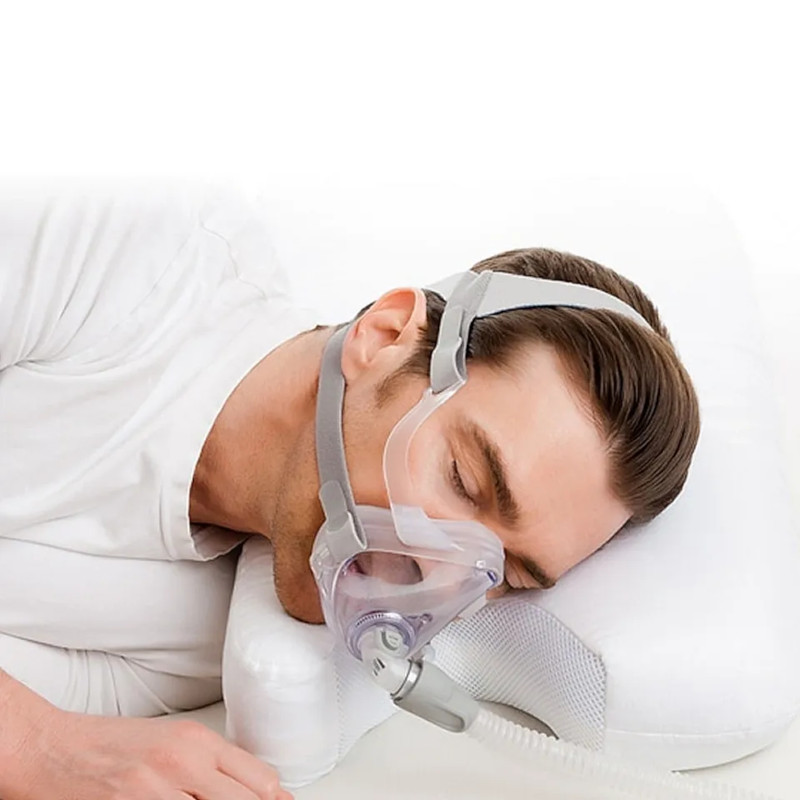
7. What is CPAP therapy and how does it function?
CPAP therapy delivers a continuous stream of positive airway pressure through a mask to maintain airway patency during sleep. CPAP is the first-line therapy for moderate to severe obstructive sleep apnea.
8. Is CPAP therapy tolerable for patients?
While initial adaptation may be required, contemporary CPAP devices and mask interfaces are designed to maximize comfort, minimize noise, and provide customizable settings. Our clinical team assists patients to optimize device use and compliance.
9. What are the potential risks of untreated sleep apnea?
Untreated sleep apnea is associated with increased risk of cardiovascular disease, hypertension, cerebrovascular events, metabolic disorders, and increased risk of accidents due to excessive daytime sleepiness.
10. How do I book an appointment?
To schedule a consultation or sleep study at Perfect Sleep Solutions, patients must first visit their family physician and request a referral to our clinic. Once the referral has been submitted by the physician, our team will contact you to arrange the appointment and provide guidance on next steps.
Ready to Experience Better Sleep?
Don’t let sleep apnea control your life. Contact Perfect Sleep Solutions Inc.
today to book your HSAT appointment.